
Entsteht Mikroplastik beim Schneiden auf Küchen-Schneidebrettern aus Kunststoff?
In der täglichen Nutzung in der Küche nutzen sich Plastik-Schneidebretter durch das Arbeiten mit scharfen Messern mit der Zeit ab und können feine Partikel abgeben, die als Mikroplastik in Ihre Lebensmittel gelangen.
Mikroplastik entsteht in der Küche auf unterschiedliche Weise und gelangt oft unbemerkt in unsere Nahrung.
Als Mikroplastik bezeichnet man winzige Kunststoffpartikel, die kleiner als fünf Millimeter sind. Sie entstehen durch Abrieb, Hitze oder den Zerfall größerer Kunststoffteile.
In der Küche können beispielsweise Plastikschneidebretter beim Schneiden kleine Partikel freisetzen, die anschliessend über die Nahrung in den menschlichen Körper gelangen können.
Mehr erfahren über Mikroplastik in der KücheTitanBoard® - Das Schneidebrett aus Titan
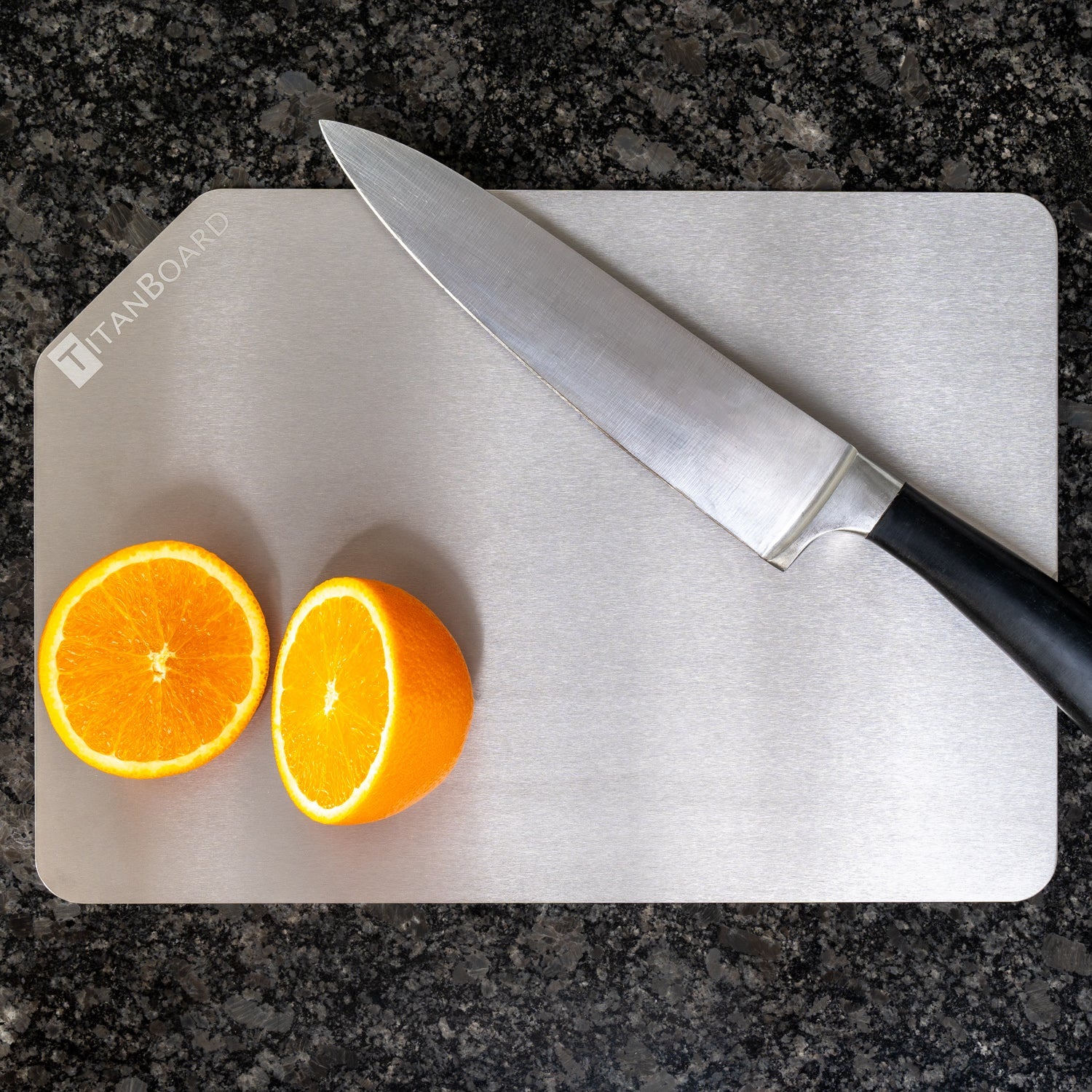
Pflegeleicht und langlebig - erfahren Sie jetzt mehr über die Vorteile des Küchen-Schneidebretts aus reinem Titan:
- - Reduziert Mikroplastik und Kunststoffabrieb in der Küche
- - Hygienischer und hochwertiger als Edelstahl-Schneidebretter
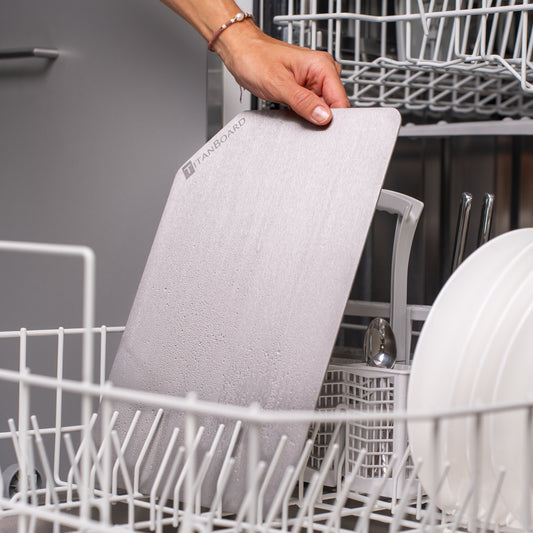
- - Spülmaschinenfest und langlebig - für den täglichen Einsatz geeignet
- - Schonend zu hochwertigen Messern
- - Designt und entwickelt in der Schweiz
- - Hergestellt aus reinem Titan für maximale Hygiene


TitanBoard® – Entwickelt für maximale Hygiene
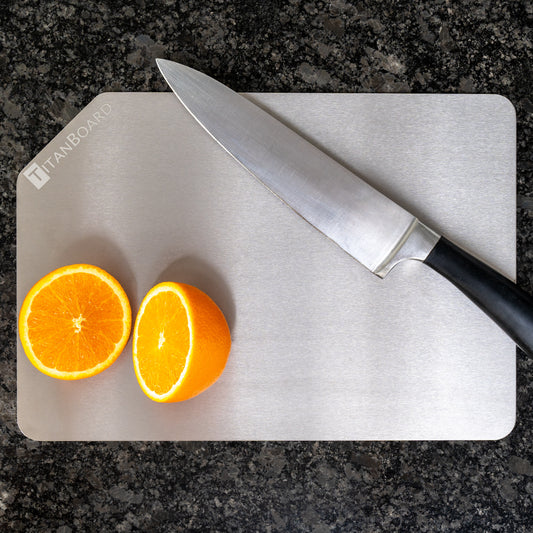
Das TitanBoard® wurde in der Schweiz entwickelt mit dem Ziel, die Schwächen klassischer Schneidebretter zu eliminieren. Titan ist ein extrem widerstandsfähiges, nicht rostendes Material, das weder Gerüche noch Flüssigkeiten oder Bakterien aufnimmt.
Die glatte Oberfläche sorgt dafür, dass sich Rückstände leicht entfernen lassen – auch nach intensiver Nutzung. Beim Schneiden von Fleisch, Fisch oder Zwiebeln bleiben auf Titan deutlich weniger Gerüche und Rückstände haften als auf vielen Holz- oder Kunststoff-Schneidebrettern.
Das Ergebnis: maximale Hygiene bei minimalem Aufwand.
TitanBoard - jetzt kaufenTitan vs. Holz vs. Plastik – der direkte Vergleich
Titan Schneidebrett
- + Nimmt keine Flüssigkeiten auf
- + Gibt kein Mikroplastik ab
- + Extrem langlebig
- + Leicht zu reinigen
Holz Schneidebrett
- ! Holz nimmt Gerüche auf
- ! Pflegeintensiv (Ölen notwendig)
- ! Kann Bakterien aufnehmen
Plastik Schneidebrett
- ! Gibt Mikroplastik ab
- ! Nutzt sich schnell ab
- ! Schnittspuren fördern Bakterien
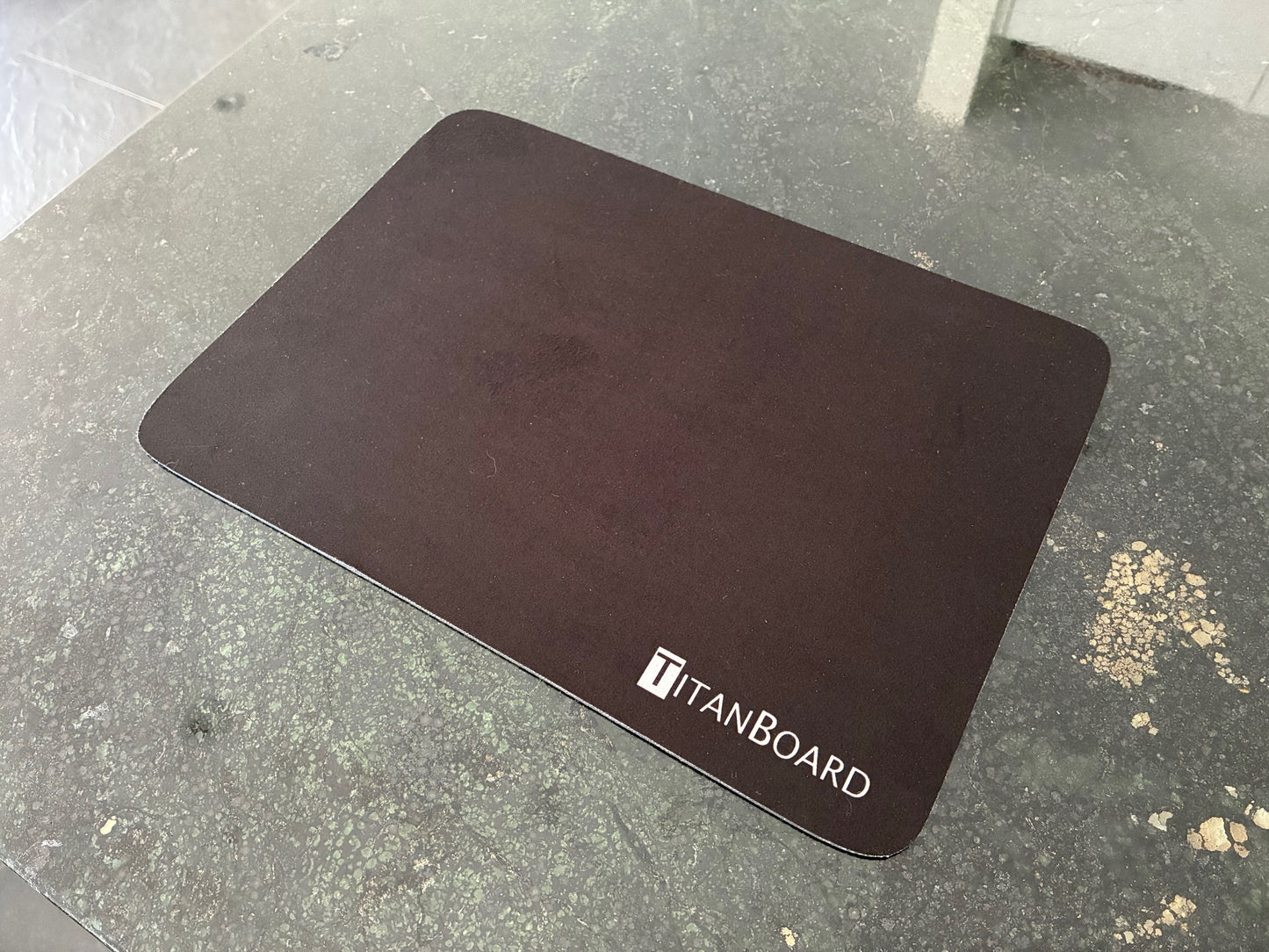
Ein Titan Schneidebrett kombiniert Hygiene, Langlebigkeit und einfache Reinigung – ohne die Nachteile klassischer Materialien. Und es ist dabei noch nachhaltig, weil es viel länger hält als übliche Edelstahl-Schneidebretter. Wir haben uns bewusst für reines Titan entschieden, weil die Hygiene durch die einfache Reinigung im Geschirrspüler ein kaum zu übertreffendes Argument ist.



Warum immer mehr Menschen auf Titan umsteigen
Immer mehr Haushalte ersetzen klassische Schneidebretter durch moderne Materialien wie Titan. Der Grund: steigendes Bewusstsein für Hygiene, Gesundheit und Nachhaltigkeit.
Ein Titan Schneidebrett bietet eine langfristige Lösung, die anderen Matreialien wie Plastik oder Holz sowohl praktisch als auch hygienisch überlegen ist.
Für wen sich ein Titan-Schneidebrett eignet
Interesting Facts about Titanium Cutting Boards
View all-

Why TitanBoard was developed in Switzerland
Why TitanBoard was developed in Switzerland Behind every good product there is an idea. Behind TitanBoard was a simple question: Why do we still use cutting boards in our kitchens...
Why TitanBoard was developed in Switzerland
Why TitanBoard was developed in Switzerland Behind every good product there is an idea. Behind TitanBoard was a simple question: Why do we still use cutting boards in our kitchens...
-

Titan vs. Wood Cutting Board – Which Cutting Bo...
Titan vs. Wood Cutting Board – Which Cutting Board Is Better for You? Wooden cutting boards have been a staple in many households for generations. They look natural, high-quality, and...
Titan vs. Wood Cutting Board – Which Cutting Bo...
Titan vs. Wood Cutting Board – Which Cutting Board Is Better for You? Wooden cutting boards have been a staple in many households for generations. They look natural, high-quality, and...
-

Titan vs. Plastic Cutting Board – Which Materia...
Titanium vs. Plastic Cutting Board – Which Material is the Better Choice? Those looking to buy a new cutting board usually encounter two very different materials: plastic or titanium. While...
Titan vs. Plastic Cutting Board – Which Materia...
Titanium vs. Plastic Cutting Board – Which Material is the Better Choice? Those looking to buy a new cutting board usually encounter two very different materials: plastic or titanium. While...
-

The best cutting board for meat, vegetables, an...
Which cutting board is best for daily use? The selection of cutting boards is vast. Wood, plastic, glass, bamboo, stainless steel, or titanium – each material has its own properties....
The best cutting board for meat, vegetables, an...
Which cutting board is best for daily use? The selection of cutting boards is vast. Wood, plastic, glass, bamboo, stainless steel, or titanium – each material has its own properties....


TitanBoard® - the hygienic alternative from Switzerland for your kitchen


TitanBoard® Set of 2 | Plastic-free cutting boards | made of pure titanium
Discover TitanBoard®
Are you still using plastic cutting boards in your kitchen? Do you...
Let customers speak for us
Bin bis jetzt sehr zufrieden.

TitanBoard bietet fachkompetente, individuelle und freundliche Beratung. Das Schneidebrett wurde schnell geliefert.

Am Montag 22.9.2025 habe ich das TitanBord 2er Set bestellt und am Dienstag war es bereits in meinem Briefkasten, schneller gehts wohl nicht mehr, bravo! Beim auspacken stellte ich aber fest dass nur 1 TitanBord dabei war mit Unterlagematte. Ich habe deswegen bereits eine Nachricht geschrieben. Die alten Schneidebretter habe ich bereits entsorgt. Ich habe der Gesundheit zu Liebe diese TitanBoard gekauft, Umweltgifte sind sonst schon genügend vorhanden. Ich hoffe, dass ich das 2. TitanBoard auch noch schnell bekomme.
Mit freundlichen Grüssen
Marcel Perler, Rüttihardstr. 3, 4127 Birsfelden

Das Titanboard ist beidseitig nuztbar und der Preis fürs Sparset ist super. N. Stüssi
Habe mich für das Titanbrett entschieden und von Holz- und Plastikbrettern aus gesundheitlichen und hygienischen Gründen Abschied genommen.
Einfach und schnell abwischen und es ist wieder einsatzbereit. Bin sehr zufrieden. Francesca
Das Titanboard sieht sehr hochwertig aus und rechtfertig den Preis absolut. Samantha
Our products
-
TitanBoard® Set of 2 | Plastic-free cutting boards | made of pure titanium
Regular price CHF 94.80Regular priceCHF 119.80Sale price CHF 94.80Sale -
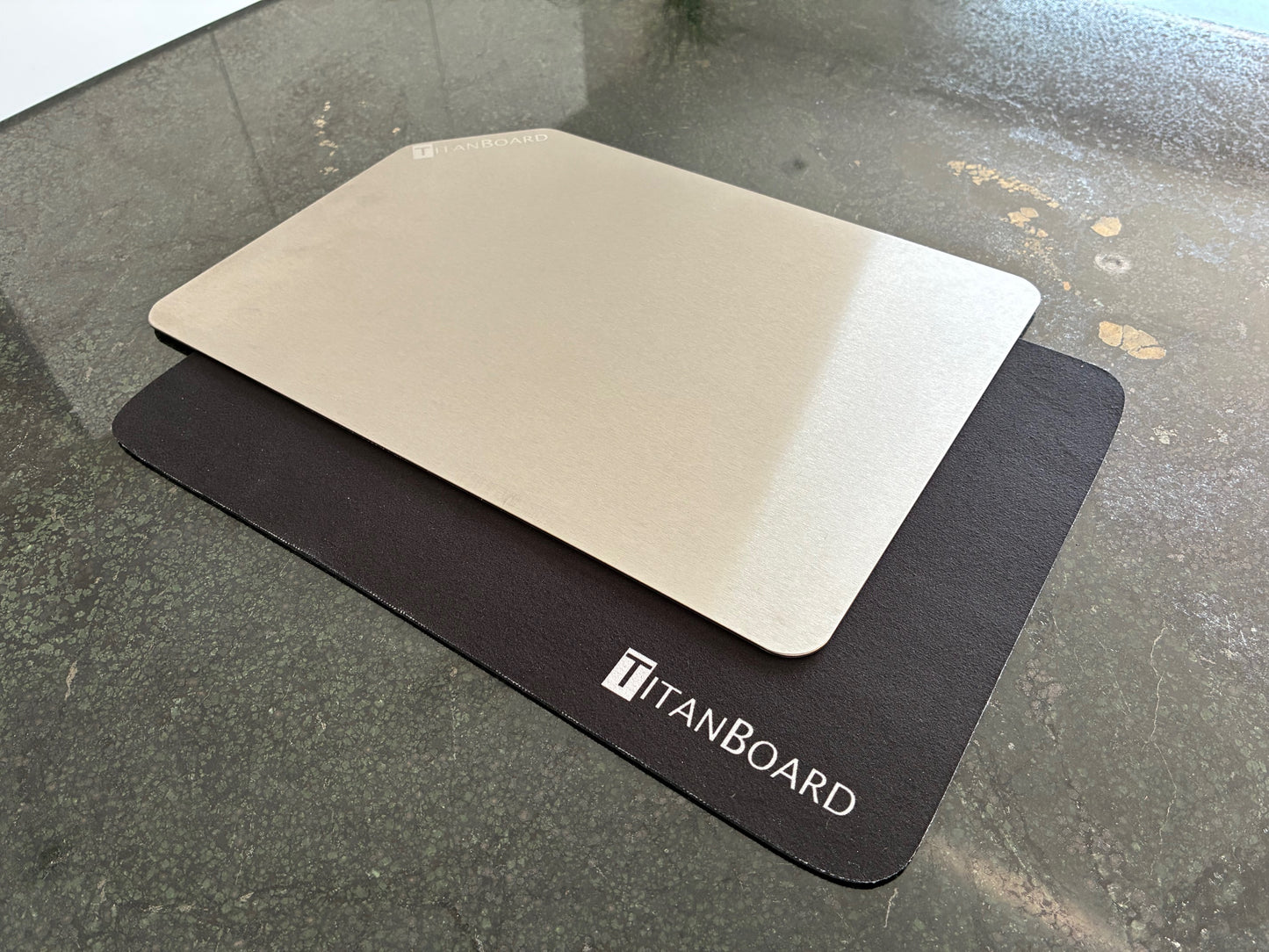
TitanBoard® 3-piece set – Plastic-free cutting boards | with 2 non-slip underlay mats | pure titanium
Regular price CHF 139.50Regular priceCHF 179.50Sale price CHF 139.50Sale -
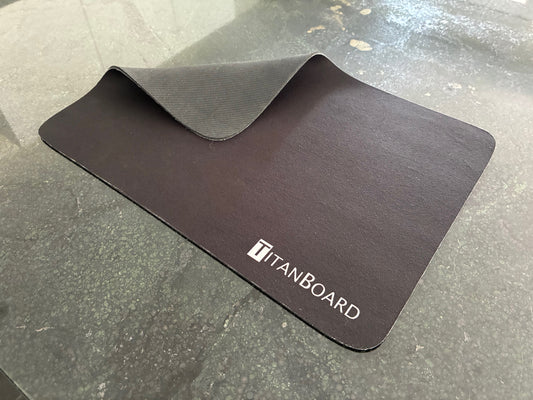
TitanBoard® Non-slip Mat | Cutting board accessory without microplastics
Regular price CHF 14.90Regular price