Titanium vs. Wood vs. Plastic - the Comparison
Cutting boards made of various types of wood are often used in professional kitchens and private households. These offer several advantages, such as their soft material, which is far below the hardness of your kitchen knives, ensuring your knives stay sharp for a long time. At the same time, however, every cut can create nicks and grooves in the wood, where bacteria can settle due to the penetrating liquid from meat or fruits, potentially becoming a health hazard:

Unlike wooden cutting boards, the advantages of plastic cutting boards are obvious: they are often very inexpensive, can be used in many colors and shapes, and can be purchased anywhere. But plastic cutting boards also come with a very significant disadvantage: namely, the danger that can arise from abrasion when cutting on them: microplastics!
During the production of plastic cutting boards, plasticizers and other substances like BPA - or Bisphenol A - can sometimes be used to make the plastic shatterproof and at the same time elastic.
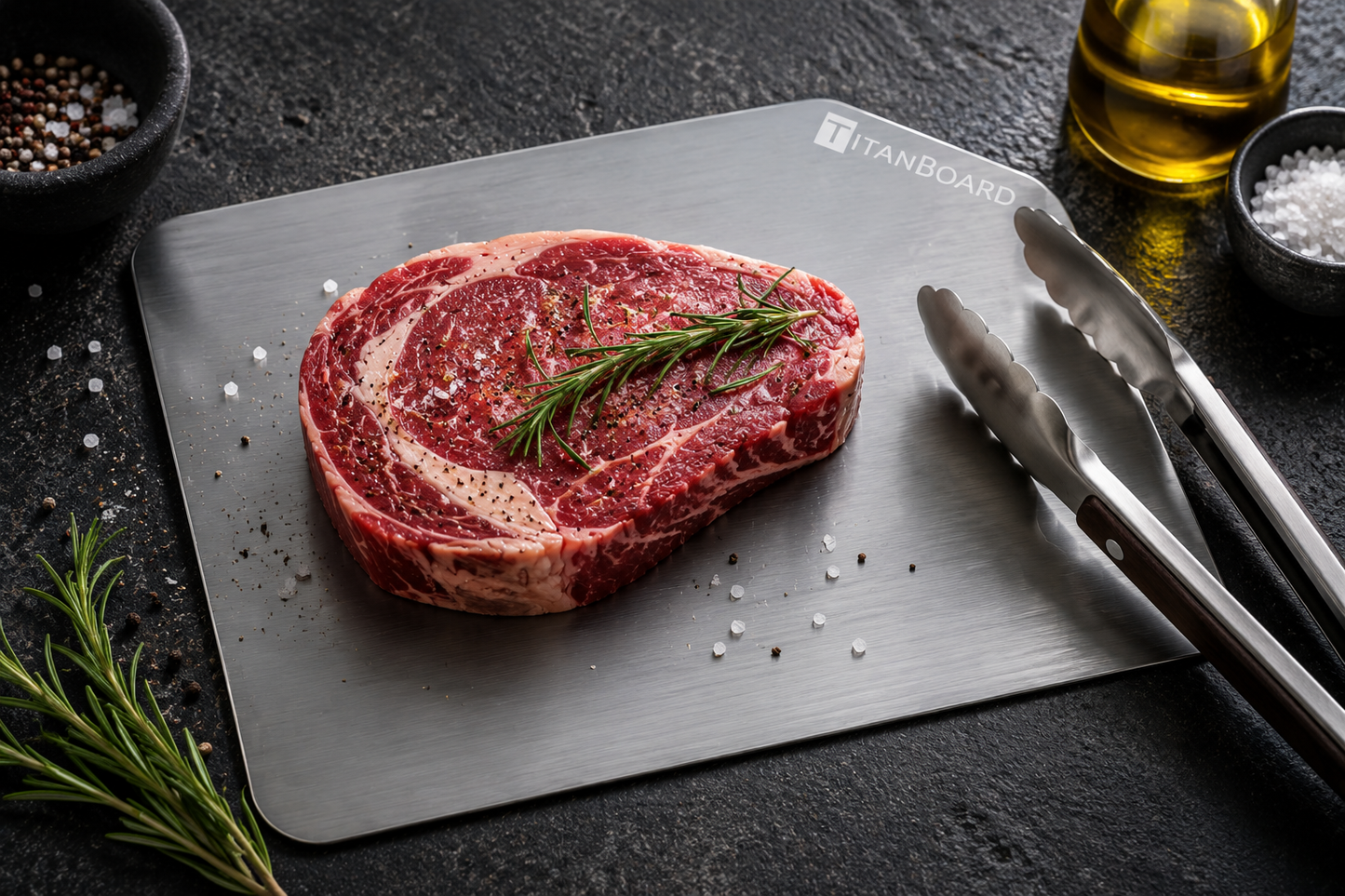
A titanium cutting board combines hygiene, durability, and easy cleaning – without the disadvantages of classic materials. And it is also sustainable because it lasts much longer than conventional stainless steel cutting boards. We deliberately chose pure titanium because its hygiene, due to easy cleaning in the dishwasher, is an almost unbeatable argument.
Take advantage of the opportunity now to reduce your old and potentially dangerous plastic or wooden cutting boards in your kitchen by purchasing a TitanBoard ®!